

When Walt Disney created the first Disneyland way back in 1955, his vision was for a place that the entire family could enjoy together.
Things have changed a lot since Walt’s day, but the Disney parks still try to be as accommodating as possible to as many people as they can, including people who are differently-abled. (Otherwise known as disabled or handicapped depending where you’re from, but I prefer differently-abled so that’s what we’re using here!). And that includes Disneyland Paris of course.
We’re differently-abled here (hence why we’re Magically Different Mouse!), and we have experience of tackling the Disney parks in a way that we can manage. We’ll dive deeply into more of these topics here on the blog in time, but here’s an overview of what to consider if you (or someone in your party) is differently-abled and planning a trip to Disneyland Paris.
First things first – get planning!
It is possible to have a wonderful time at Disneyland Paris regardless of any differences you may have to others – and that includes whether it’s a physical or mental difference, a learning difference (such as Autism), and whether its visible or otherwise. But, it may take a bit of extra planning – more so than some maybe.
The first thing to consider is when to go and how long for. You might have restrictions on this due to school holidays and the like, but you might also need to consider your health needs too. For example if you have a condition such as Reynaud’s, arthritis, or anything that can be triggered by very cold weather you might want to avoid the winter months if possible (or plan to pack a lot of layers!) If you have conditions impacted by heat, think about if you want to go during the summer when Paris can get brain-meltingly hot – the temperatures in Paris this summer were regularly topping 30C (that’s 86 fahrenheit). If you have to go at a time when you know you could trigger a medical condition (for example you’ve set your heart on seeing Christmas decs so you have to go in winter) then plan accordingly with clothing and other supports you might need. Another thing to consider is crowds – if you or someone in your group struggles with large crowds you may want to aim for the quietest seasons, or at least avoid major holidays.
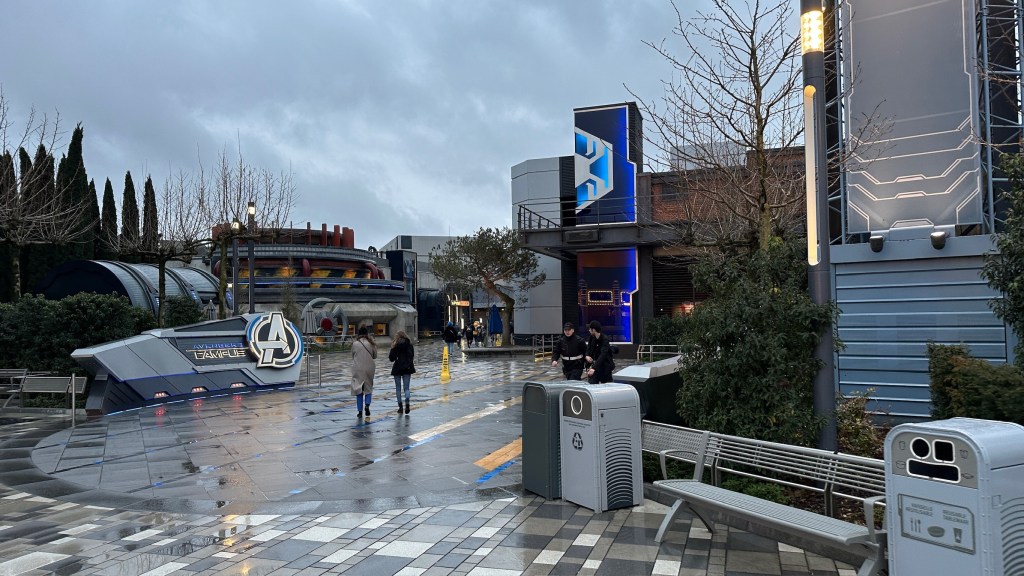
As for how long for – if it’s a first visit I’d recommend at least 3 nights and 4 days to get the most out of the parks. But bear in mind – the parks are big and there’s a lot of walking and standing. If it’s possible I’d recommend spreading out the trip for longer if you can for factoring breaks and chances to sit down. We typically go for at least 4 nights and 5 days, and recently have been going for 5 nights and 6 days because that allows for a lot of sitting breaks and means we don’t have to attack the parks running around like a headless chicken. If you have people in your group who could get over-stimulated then a longer trip might allow more breaks in the quiet to allow them to decompress, although more days might mean more opportunities to get triggered so that’s something to work out.
The next thing to figure out is where to stay. The good news – all the onsite Disney hotels have rooms equipped for people who are differently-abled. You may need to ring Disney to book one of those (as opposed to booking online) depending on availability. Hotels with swimming pools also offer assistance to get in and out of the pool. The buses also offer a shuttle bus to the parks too (with the exception of the Disneyland Hotel which is essentially at the park entrance!). Couple of things to note though – the buses are not able to handle mobility scooters / ECVs, and getting on the buses can be a bit of a scrum. I say a bit, make that a lot of a scrum. I have heard stories of people in wheelchairs just not being able to get on a shuttle simply because loads of other people pushed in front and took up the space! Hopefully these incidents are rare, but I’m a big advocate of walking back to your hotel if you can. All the paths are smooth, flat and accessible, and can be very pretty too! The walk from the parks to the furthest away hotels (Cheyenne and Santa Fe) is about 15-20 minutes. If you have mobility issues and your budget allows it, you may want to consider one of the other hotels to be closer to the parks. But we’ve had wonderful trips at all the hotels regardless!

The other big thing to plan in advance is travel – how are you getting to Disneyland Paris? It’ll depend where you’re coming from of course. If you’re flying and you’ll need assistance, make sure to book it in advance. When it comes to getting from central Paris to Disneyland Paris you’d probably be better off booking a private transfer than risking the public transport system, from our experience the latter isn’t the most accessible! I think the Eurostar is accessible, but again you’d need to plan either the interchange at Lille if you go that route (Eurostar should be able to advise), or how to get from Gard du Nord if you head into central Paris. You can also of course drive, and park at the hotels. They all have disabled parking.
How Disney can support your needs
Disney recognises that not everyone can wait in long ride lines, and at Disneyland Paris there are two options they offer to support people:
- Priority Access Pass – This pass is designed for anyone who is officially registered as Disabled. You will be asked for proof! From the UK this proof can include a reward letter for PIP, a blue badge, or a National Disability Card. You can apply for this pass online up to 30 days before you check in. When you arrive at Disneyland Paris you’ll need to show your proof before you can pick up the card either from your hotel or from the park. The Priority Access pass gives quicker (although not immediate – Disney does stress that!) access to attractions and characters. Typically this is through the Premier Access lane, if there is one, or maybe the exit. This may be different if you’re in a wheelchair, but cast members can help. With this card you can also get access to special viewing areas for the shows (including the night time spectaculars) and the parades. There are also special desks for restaurants apparently – we’ve never used this before so will be trying it on our next visit!
- Easy Access Pass – This pass is designed for those who may not be registered as disabled but who have certain long-term health conditions. You can see a list of them on Disney’s website. This card needs to be applied for at Disneyland Paris itself, and you’ll need a medical certificate dated within the previous 30 days certifying that you have one of the conditions. The Easy Access pass differs from the Priority Access pass in that you need to book return times for the rides and characters, and there’s no access to the special viewing areas.

Some things to note about both cards – both are limited to just the person holding the card and up to 4 guests (or up to 2 for accessing the special show areas). As such it’s not a way getting your whole extended family of 12 on a ride! You also need to have the cards handy when at Disneyland Paris so you can show it for access or to book slots. A lanyard is a good way of keeping it on hand. Most importantly in both cases don’t expect to walk right to the front of either a character or attraction line – you’ll get there a lot quicker than you would in the standby, but the cast members are still trying to make things fair for everyone in the parks.
My biggest piece of advice – DO NOT try to fake any sort of condition or documentation to get a card. Not only is this incredibly unfair to those who need it, but Disney take a very dim view and if you’re caught you could be in a lot of trouble. That Disney ask for documentation is a way for them to manage demand and ensure those who did need the system can use it. As such yelling or bullying a cast member to try and get one is, frankly, stupid.
Thinking about rides
The attractions and rides at Disneyland Paris are a wonderful variety of themed experiences. And again, Disney does try to make them as accessible as possible. But you’ll need to consider your own needs before plunging in to everything! For rides we suggest:
- Downloading Disney’s accessible park maps – this breaks down all the accessibility information you need to know, including if you need to transfer out of a wheelchair or not, special effects used, and more. You can download them from Disney’s website here.
- Know what to expect when getting on and off the ride – Some rides stop to allow guests to get on. Others move continuously. If you’re in a wheelchair, in some rides you can stay in the chair, in others you’ll need to transfer. It’ll be down to you to decide what’s possible. Note though that Disney staff cannot help in any wheelchair transfers – you’ll need to be able to do it either under your own steam, or with help from your group.
- Read the ride warnings – Disney’s rides vary from the gentlest boat ride to wild rollercoasters and everything in between. Both outside the rides and online they list ride warnings for people who the ride may not be suitable for. Please read them! It may turn out a ride you thought was perfectly safe may not be such a good idea. I have seen people say online that they take Disney’s ride warnings with a pinch of salt, because it’s just them covering themselves. It’s true that the warnings can be vague, they often just mention ‘back problems’ which could range from ‘slept a bit funny and now ache’ to ‘recently had major spinal surgery’. You know your body best and what it can tolerate!
- Watch videos online – While there’s a magic in experiencing something fresh when you’re actually in the park, if you’re nervous about an attraction or how someone in your family might react to one then look at a ride video online, a quick search on YouTube will bring up plenty. This will give at least an idea of what the vehicles are like, how rough rides are, and what people might see. This can also be great for nervous little ones so they can have an idea before hand, or so you might get an inkling of how they may respond!
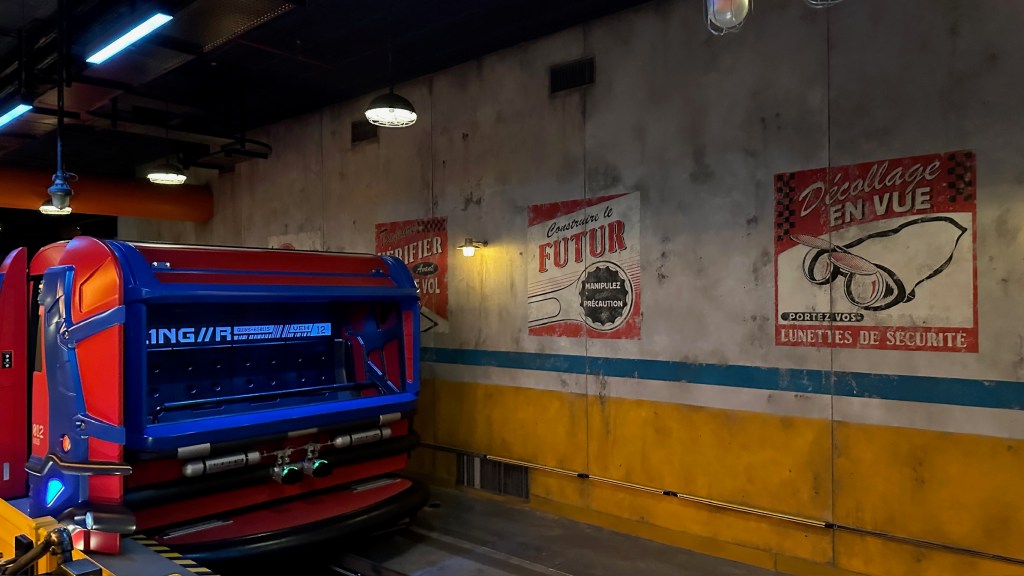
- Think about ride vehicles – Even if a ride is technically fine for you needs, it’s worth considering ride vehicles. Fun fact, I can’t ride the carousel anymore because if my horse gets stuck at the top I will freak out and not be able to get off it! I also really struggle getting on and off Crush’s Coaster because the ride vehicle kept moving but the floor didn’t, and stepping on and off moving things does not agree with my coordination issues. You’re the best judge of what you can and can’t do but don’t be afraid to speak out if something puts you off!
- Think about time spent waiting – While the access passes can help with waiting in physical lines, you’ll probably end up waiting at least a little while at some point in Disneyland Paris. For some folks, waiting of any sort is hard, so plan for things to keep them entertained – toys, games, snacks, whatever! (I suspect this is part of the reason bubble wands are so popular at Disney because they keep antsy kids entertained!)
Dining at Disney when Differently-Abled
Wow that was a lot of alliteration! Anyway…
As with other things Disney does try to be accommodating for food allergies and special diets.
My big piece of advice if you have anyone in your party with an allergy or intolerance – speak to a Disney cast member before ordering. Typically they can supply an allergy guide or bring out a chef that can help you. At buffets they may walk along the buffet line pointing out what you can eat or avoid.
If you’re in a counter service I’d recommend ordering at one of the counters and speaking to a cast member as opposed to using mobile ordering, that way you can ensure your needs are being heard.
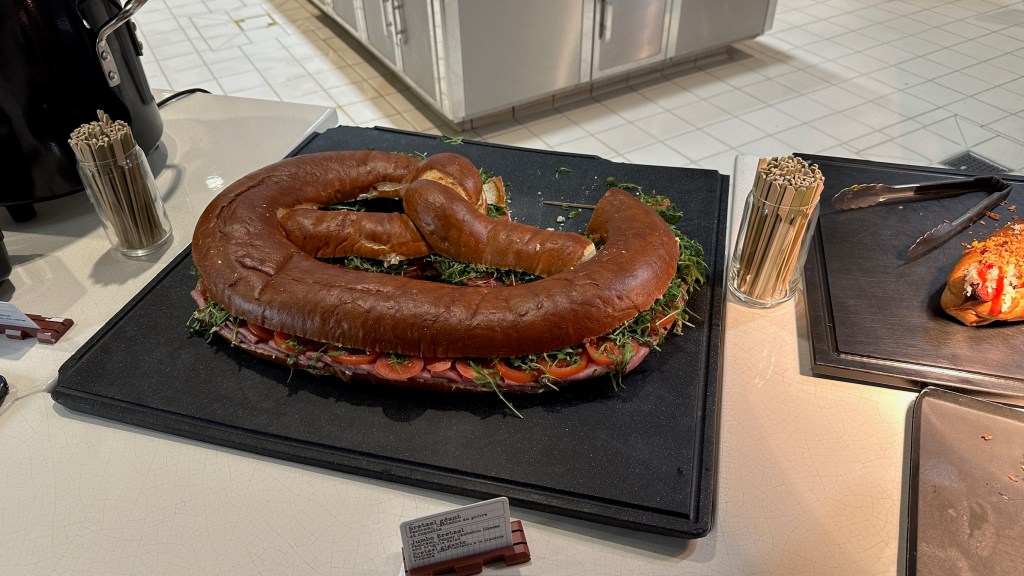
A note about kids meals – in France they tend not to have more ‘kid’s food’, but instead their children tend to eat much the same food the adults do. Kind of makes sense. But not much consolation if you have a really picky eater (or someone with a condition like ARFID) who can only eat one or two safe foods, only to find them not on the menu! Again, it’s worth speaking to a cast member to see if they can accommodate. I’d also recommend in these circumstances if you can bringing in your own snacks (it’s allowed!) so there’s always something on hand that can be eaten!
On a more positive note, we’ve found pausing for a snack or meal a great way to help with pacing as it enforces a pause where I can rest my joints!
Other things to consider…
There’s so many other things to consider when visiting Disneyland Paris if you’re differently-abled. Here’s a few:
- Sensory overload – Disney parks are filled with sounds, visual and smells enough to overload many people. If anyone in your group is prone to sensory overload then it may well happen at some point! If that happens its best to find quiet spots in the park – some of the side paths around Adventureland are a good option in Disneyland Park, and the path towards Cars Road Rally in the Studios. You can also go to First Aid or the Baby Care centres if you need a quiet space. I’d also recommend fidget toys for people who might get anxious or overwhelmed.
- Toilets – All the toilets have accessible cubicles. There are changing places toilets at First Aid in both parks. Some of the toilets have automatic flushes which can upset some people, but you can cover the sensor with a hand or post-it note to help!
- Pack your medication, and bring spares! – If you need to take regular medication, bring it with you! And maybe try to bring some spare, or a copy of your prescription, just in case you mislay any of your meds or get delayed on the way home for some reason. If you need it normally you’ll probably need it in Disneyland Paris! It’s also worth noting that in France any form of medication including paracetamol and the like has to be bought from a pharmacy, so you won’t see it for sale in the parks or resort shops. You might be able to get single doses from First Aid in a pinch.
- Bring the walking aid – If you’re someone who uses a walking aid just occasionally, in case of a flare or ‘bad day’, bring it to Disneyland Paris. You will be walking A LOT. (It should go without saying if you regularly use a mobility aid that you’ll bring that too!).
- Service dogs – Registered service dogs are allowed. You need to have proof of their vaccinations and status before you can bring them into the park though. If they do come in it’s worth noting they won’t be allowed on all rides, but you should have somewhere to leave them if that’s the case.
- Help for those with limited vision or hearing – Audio description, large print maps, braille information, and signing is available in many places in Disneyland Paris. The Accessibility guide has all the information you should need!
- First aid might be your best friend – No one wants to use first aid while at Disney, but take it from me, it can happen! There’s a first aid in both parks who can help with anything from blisters to bumps and grazes.
- Have travel insurance – If travelling from outside France I’d recommend having travel insurance that will cover all your needs including medical conditions. Hopefully you’ll never need it but it’s better to have it just in case!
- PACE YOURSELF! – I can’t stress this enough, but make sure you pace yourself in the parks. Take rests. If you need to, accept you can’t do everything! Don’t wreck yourself trying to ‘do it all’, just do what you can.
Phew, that was a lot! We’ll be looking in more depth at many of these topics in the future, but in the meantime let us know any questions or thoughts in the comments!




 Magically Different Mouse
Leave a reply to CornishShaman Cancel reply